


The Note Was Gone: How a Grocery Store Parking Lot Turned Into a $750 Lesson
David is the kind of person who parks at the far end of the lot. Always has. He likes the walk, he likes the open space, and he likes the fact that fewer cars means fewer dings.
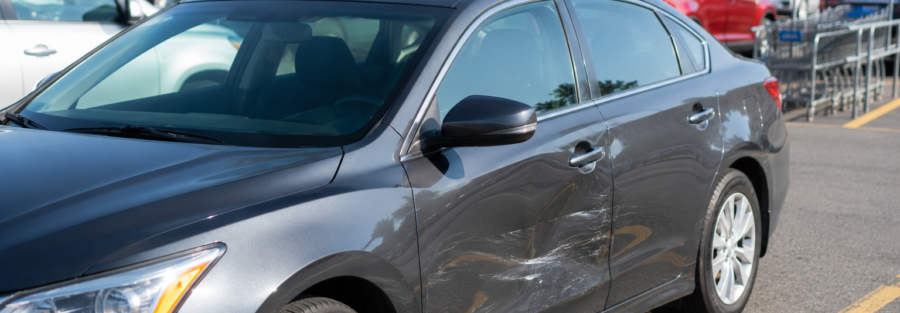
So when he came out of the grocery store on a Saturday morning, two bags of groceries in each hand, and saw the long ugly scrape running down the driver’s side of his sedan — paint missing, door slightly buckled — his first thought was that he was in the wrong row.
He wasn’t.
His second thought was that there had to be a note.
There wasn’t.
A Common Story With an Uncommon Sting
Parking lot hit-and-runs are one of the most frustrating insurance situations a driver can face. According to industry estimates, roughly 70 percent of all parking lot collisions go unreported by the at-fault driver. They scrape your car, they panic, and they drive away.
You’re left with damage you didn’t cause and a decision to make: pay out of pocket, or file a claim.
David called his insurance company from the parking lot. He’s had the same carrier for fifteen years. They were helpful and quick. Because the other driver couldn’t be identified, the claim would go through his collision coverage.
The repair estimate came back two days later: $2,300.
“Great news,” his agent told him. “We’ll cover everything beyond your deductible.”
“And my deductible is…”
“Seven hundred and fifty dollars.”
The Math That Catches Drivers Off Guard
Here is the part that always surprises people. David didn’t do anything wrong. Someone hit his parked car and drove away. He has paid his premium, on time, every month, for over a decade. His record is clean.
And still, when the dust settles, he is the one writing a $750 check.
That’s not because his insurance company is being unfair. It’s because that’s how deductibles work. The deductible is your share of the claim — your part of the financial responsibility — regardless of whether you were at fault, regardless of whether the other driver can be identified, regardless of how long you’ve been a customer.
For David, $750 wasn’t catastrophic. He could pay it. But it was also money he had set aside for his daughter’s braces consultation that month, and now it wasn’t.
“I just kept thinking, this isn’t even my fault,” he said. “And I’m still the one paying for it.”
Why Comprehensive and Collision Both Have Deductibles
Most drivers know they have a deductible. Fewer drivers realize they have more than one.
If you have full coverage, you almost always have two separate deductibles on your policy:
- Collision deductible: Applies when your car is damaged in a collision — another car, a tree, a guardrail, or, yes, a hit-and-run scrape in a parking lot.
- Comprehensive deductible: Applies to non-collision damage — hail, theft, vandalism, animal strikes, falling tree limbs.
Some policies set them at the same amount. Some don’t. And many drivers don’t know which is which until they’re standing in a parking lot with groceries in their hands and a scrape on their door.
The Plan David Found
A coworker mentioned deductible reimbursement coverage to David a few weeks after the parking lot incident. He admits he was skeptical at first — he thought of it as one more bill, one more thing to pay for, one more insurance product that probably didn’t deliver.
Then he ran the numbers.
The monthly cost was less than what he and his wife spent on a single takeout dinner. The coverage would pay him back for his auto deductible — both collision and comprehensive — up to the plan limits, after a covered claim.
If he had been enrolled before the parking lot incident, the math would have looked like this:
- $750 paid out of pocket to repair shop
- Proof of payment submitted to American Deductible
- $750 reimbursed, typically within 10 to 15 business days
- Daughter’s braces consultation back on the calendar
What Doesn’t Get Reimbursed
It’s worth being clear about what deductible reimbursement does and doesn’t cover. A few important rules to remember:
- Your primary insurance company has to accept the claim first. If they deny it, the deductible reimbursement doesn’t apply.
- The total claim has to exceed your deductible by at least one dollar. Tiny scrapes that don’t justify a claim won’t trigger reimbursement.
- Certain situations, like impaired driving or commercial use of the vehicle, are excluded.
For everyday accidents — the parking lot scrapes, the rear-end collisions, the unexpected encounters with deer and hail and falling branches — deductible reimbursement does exactly what it sounds like it does. It pays you back.
The Real Reason David Signed Up
When we asked David what finally convinced him, he didn’t say it was the math, though the math worked. He didn’t say it was the simplicity, though the process is simple.
He said it was the feeling he had when he walked out of the grocery store that Saturday morning. The feeling of being on the hook for someone else’s mistake. The feeling of opening his wallet to pay for damage he didn’t cause.
“I just don’t want to feel that way again,” he said. “If something happens, I want to know I’m covered. That’s it.”
Has a parking lot, a hit-and-run, or just bad luck ever cost you money you didn’t plan to spend? Get a free quote from American Deductible and find out how to take that financial sting out of the next surprise.